Legends say that in olden times the world was divided among six brothers saints. St. Nicholas the Wondermaker got the turbulent waters and the sea winds. And he became the guardian of the poor and unjustly convicted - a little known mission of his. Well, we chose it as the starting point of our holiday walk "in sepia". A walk around one of the least known parts of the city – the "Akaciite" quarter. There the people did settle for a while, often driven away from their homes, hoping eventually to move to the city center. This small part of the city is squished between the Burgas Lake, the Port, "Vazrazhdane" quarter and the ring road to Sozopol. And although today we pass by without staring at it, in the past there lived a friendly community of people as different as the corners of our country, and alike in their zeal, diligence and faith. These people were not taking a walk in the Sea Garden, but in the Hunting garden. They did not celebrate in the Sea casino but on the lawn "Kandrite", did not go to the Sea baths but to the beach with scorching black sand at the edge of town, which was very clean at that time. "Akaciite" are populated after the Liberation. The neighbourhood originally hosted dock workers and water carriers from the area "Sweet wells", which at the time supplied Burgas with drinking water. The district is the first stop of many refugees from Thrace and Macedonia. That was the case of our heroine Dochka Edreva:
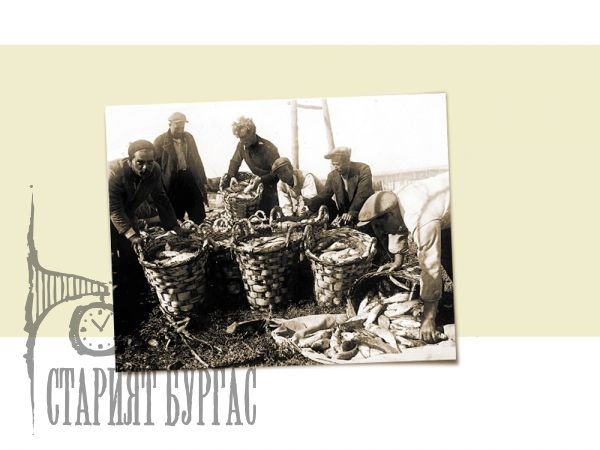
“My mom and dad waited for me to come to this world to leave Malko Tarnovo in search of a better life. So in the 1936 they came to my three uncles who already lived in "Akaciite". They setteled just opposite their houses. Two of my uncles were fishermen. Uncle Atanas was well known as a great fisherman with a boat, nets and many helpers. Down the street were the houses of the Jews Tsurito, Vyara, Tsikoto and Shangoto. Tsikoto played the guitar very nice and has always entertained us during the evening meetings. I had a girlfriend, whose mother was Stanka Hubavata (The Nice). And this Stanka "walked out" with a German lad. And how did we know about the Germans? One day we were playing Dadair around the neighborhood (today's Hide and Seek) we saw them marching. Then they sat for a rest on our favourite lawn for games "Kandrite". We called the lawn that way, because some large thorn bushes grew there, which we called the same way. On this meadow we gathered also for celebrations. On Nikulden uncle Atanas – the fisherman, was getting up very early, gathered his helpers and tightened the boats. If the weather was clear, they headed to sea. If it was bad – to the lake. All of us - big and small, the whole neighbourhood, gathered to wait for them in the afternoon. They got out of the water at some point and poured the full nets on the big meadow. They separated the fish, mainly mackerel, into big and small. The big was for baking and the small - for soup. Big bonfires were lit. Our parents roasted the fish on them. And we made huge rope swings, on which we swayed. When the meal was ready, it was also given to the poor people. We were not divided then, our doors were open, as well as our hearts and tables. Besides the roasted fish, we also prepared filled carp. With more onions and tomatoes, and also we put raisins. Our mothers boiled wheat and other meatless dishes. All of us gathered and celebrated. And at night the streets lit up. Everybody decorated their yards with colourful lights. Coloured bulbs were not always to be found. So we had a specialist. I remember that they called him Krushaka, but why - I do not know. So Krushaka did not leave a house undecorated. He was painting the bulbs, in case you need them. The festivities lasted until the morning. It was the same for all holidays. We also celebrated Easter together on "Kandrite". Again we made big swings, but to get on one of them, one should give a mottled egg. And the aroma of fresh cakes was "drifting" over the air. During the summer, as we were often flooded we were walking barefoot all the time.
After that we slowly settled at the different parts of the city. We sold our houses in "Akaciite" and everybody went to seek his fortune.
Text: Gergana Kostova
Magazine "Vij! Burgas", Vol. 5